Franchise hotline:400-830-9488
Wall finishing and leak repair Dealers wanted nationwide

Wall finishing and leak repair Dealers wanted nationwide
Franchise hotline:400-830-9488
 You are here: Home » Texture Series » Rome · Faux Leather Sand Art Coating
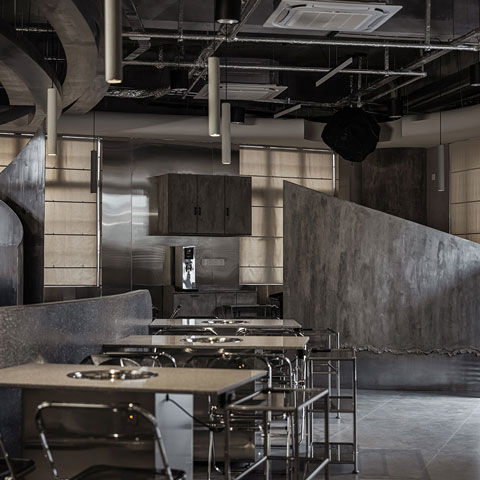
Roma Faux Leather Sand is a finely milled, slightly matte pearlescent material. The subtly visible sand texture combined with the delicate matte feel naturally draws people in. Because it is simple to apply yet can create high-end artistic effects, it is gradually becoming a mainstream choice for artistic coatings.
Product Description|PRODUCT DESCRIPTION
Roma Faux Leather Sand is a finely milled, slightly matte pearlescent material. The subtly visible sand texture combined with the delicate matte feel naturally draws people in. Because it is simple to apply yet can create high-end artistic effects, it is gradually becoming a mainstream choice for artistic coatings.
Product Features|PRODUCT FEATURES
◆Matte texture
◆Scratch-resistant and wear-resistant
◆Diverse craftsmanship
Scene Display|Scene Display


Construction Guide|CONSTRUCTION GUIDE
Product effect:
The outstanding colors blend with the texture of sand velvet, shimmering with varying light and shadow from different angles, luxurious yet not lacking in substance, radiant yet elegant, enhancing the overall decor of the space, creating an elegant, rich, and colorful fashionable home.
Applicable Location:
Large areas of walls, ceilings, and feature walls
Construction process:
Technique One (Rome · Imitation Leather Sand Brushed Pattern):
Roll on a low-odor multifunctional sealing primer 1-2 coats → roll on Zhen Cai eggshell gloss 2 coats (mixed to the same color) → use a cross-hatch or diagonal brush technique to evenly apply Roma faux leather sand, and when semi-dry, lightly brush over once, applying 2 coats in total (appropriately dilute the material with 10-20% water, the process for the second coat is the same as the first, and apply the second coat only after the first coat is completely dry).
Technique Two (Roman · Imitation Leather Sand-Pounded Pattern):
Roll on the odorless multi-functional sealing primer 1–2 coats → Roll on the Zhen Cai eggshell gloss 2 coats (mixed to the same color) → Evenly roll on Roman faux leather sand, then use an artistic linear pattern to dab evenly. When semi-dry, smooth with a double-sided plastic scraper, applying 2 coats (material can be appropriately diluted with about 20% water; the second coat follows the same process as the first, applying the second coat only after the first coat is fully dry).
Process Three (Rome · Faux Leather Sand Vertical Texture):
Roll-on odorless multi-functional sealing primer 1-2 coats → Roll-on Zhen Cai eggshell lacquer 2 coats (color matched) → Evenly roll on Roma faux leather sand, then use a bristle brush (cut the bristle brush with scissors to create a tooth-like texture) to drag strokes up and down, then straighten the texture in the same direction, apply 2 coats (dilute the material with about 10%-20% water, the second coat process is the same as the first coat, apply the second coat after the first coat is completely dry)
Construction Tools:
Short-haired roller, bristle brush, artistic linear scraper, plastic double-sided scraper
Supporting materials:Odorless Multi-Function Sealing Primer, Premium Eggshell Finish
Coating Rate:5-6 ㎡/kg, 2 coats (the actual coverage may vary depending on the application method, wall roughness, and different construction techniques)
Dilution:10-20% (dilute with clean water)
Construction Precautions:
Scan pattern
① Before applying Roman faux leather sand, it is recommended to dilute with about 20% water (to prevent it from drying too quickly and affecting the semi-dry re-brushing).
② When applying the topcoat with a roller, try to roll and apply the material evenly (if too thin, it will show streaks and dry quickly; if too thick, the effect of the application will not be obvious).
Pattern stamping
① Before applying Roman faux leather sand, it is recommended to dilute with about 20% water and apply a slightly thicker layer (to prevent it from drying too quickly, which can affect the application and make it easier to create patterns).
② When adjusting colors, it is recommended that the color of 'Flowing Sand Years' be slightly lighter than the middle coat color (to some extent, this avoids blotchiness).
③ When rolling the topcoat, use a cross-hatch irregular rolling method to apply the material, and avoid missing spots (the irregular rolling method will be more even and help prevent roller marks).
④When using an artistic line for the first time, make sure the line is fully coated with the material before applying; for subsequent applications, it is not necessary to coat it. ③ It is recommended to apply a penetrating primer (otherwise, when encountering loose putty walls, it is easy for bulging or bubbling to occur).
Vertical stripes
① Before applying Roman-style faux leather sand, it is recommended to dilute with about 10%-20% water and apply a slightly thicker layer (to prevent it from drying too quickly, which can affect the application and make patterns easier to form).
② When adjusting colors, it is recommended that the color of 'Flowing Sand Years' be slightly lighter than the middle coat color (to some extent, this avoids blotchiness).
③ When rolling the topcoat, use a cross-hatch irregular rolling method to apply the material, and avoid missing spots (the irregular rolling method will be more even and help prevent roller marks).
④ When pulling the texture up and down, you can apply pressure at points; when gathering the texture in the same direction, apply slightly lighter pressure.
LinksAuto Spray EquipmentSpray GunPaint FranchiseWood Paint MakerChina Coatings NetGarment TagsArt Paint FranchiseArt PaintCustom office furnitureOffice furniture manufacturerImported Decorative PaintOffice furnitureImported Decorative PaintOffice furniture brandOffice furniture designSearch External Links
© 2017 Master Ali All rights reserved. ICP: Yue ICP Bei No. 11031542


